Saturday, July 27, 2013

Some thoughts collected from the online resources

Bibliography: Vanity Fair. 2008. Why America Worships Superheroes. [online] Available at: http://www.vanityfair.com/online/daily/2008/07/why-america-worships-superheroes [Accessed: 24 Jul 2013].

Thoughts from Frank Miller, Guillermo del Toro, and Zack Snyder:

Frank Miller (born January 27, 1957) is an American writer, artist, and film director best known for his dark comic book stories and graphic novels such as Ronin, Daredevil: Born Again, Batman: The Dark Knight Returns, Sin City, and 300. He also directed the film version of The Spirit, shared directing duties with Robert Rodriguez on Sin City and produced the film 300.

Maybe one reason we can all relate to superheroes in these depressed times is that this year’s batch has had to deal with a lot more shit, and it’s turned them into assholes. Hancock’s a drunk, Tony Stark’s a war-profiteer, and Bruce Wayne’s a rich jerk. Wouldn’t you be messed up if you were fighting, respectively, L.A. crime, the Taliban, and Al Qaeda in clown makeup? Hellboy’s inner demon is that he’s an outer demon. O.K., that’s not quite as easy to relate to, but he’s nonetheless an irritable, cynical hero, and audiences like that. “We are drawn to more ambiguous superheroes,” says director Guillermo del Toro, who brought the same cinematic intelligence to Hellboy II that he did to his Academy-tickling, magic-realist masterpiece Pan’s Labyrinth in 2006. “I think that Brian Singer’s Superman proved to be perhaps too good for this world. Too clean.”

“When you look back at the time Superman was born, it was portraying, quite essentially, the ethos of the time,” del Toro adds. “When you see the recombinant DNA of the superheroes when they were reinvented in the highly dubious 80s, by Alan Moore and Frank Miller, they are virulent testaments to the neo-fascism and consumerism of a sheepish society.”

Neo-fascism is a post–World War II ideology that includes significant elements of fascism. The term neo-fascist may apply to groups that express a specific admiration for Benito Mussolini or Adolf Hitler, may also be called Neo-Nazis, and Italian Fascism or any other fascist leader/state. Neo-fascism usually includes palingenetic ultranationalism, populism, anti-immigration policies or, where relevant, nativism, anti-communism, and opposition to the parliamentary system and liberal democracy. Allegations that a group is neo-fascist may be hotly contested, especially if the term is used as a political epithet. Some post–World War II regimes have been described as neo-fascist due to their authoritarian nature, and sometimes due to their fascination with fascist ideology and rituals. 
          https://en.wikipedia.org/wiki/Neo-fascism


“Every great civilization has its superheroes,” says Miller. “America is just a much, much younger civilization… You couldn’t find a better version, in America, of the Pantheon of ancient Greece [than superheroes],” which could be why they’re such an enduring draw.

That may sound like comic-book-nerd hyperbole, but the comparison with Greek mythology is actually relevant, to a point. For one thing, to the ancients, preposterous tales of heroic feats were not to be taken literally. “It’s not that they were ‘believed,’” says Harvard Classics Professor Gregory Nagy. “That is a Christian concept. Rather, myths about heroes were accepted as valid narratives about moral truths that helped explain life.”

 But, Nagy says, “although American stories about superheroes share some of the patterns that are typical of ancient Greek myths about heroes”—the hero’s trials, for example, or the quest for cosmic balance—“myth was organically tied to ritual in the ancient Greek world, whereas the storytelling about heroes in a modern context has nothing to do with ritual.” Unless you count the ritual sacrificing of Sour Patch Kids.

Monday, July 15, 2013

Superhero Infographic collection


"Hero" and "Superhero"

What Is a Superhero?

Bibliography: Psychologytoday.com. 2010. What Is a Superhero?. [online] Available at: http://www.psychologytoday.com/blog/the-superheroes/201003/what-is-superhero [Accessed: 16 Jul 2013].

What's a superhero and why does a psychologist care?
Published on March 11, 2010 by Robin S. Rosenberg, Ph.D. in The Superheroes


Broad Definition: Someone who manifests a super-ability or superpower and generally acts heroically-is brave and self-sacrificing.
  • Microsoft Word has as an alternate definition of hero (not a superhero, mind you, but a plain hero): A person "with superhuman powers." And Merriam-Webster's online dictionary defines a hero as "a mythological or legendary figure often of divine descent endowed with great strength or ability."

My thoughts
Superhero is always created at different age to reflect the deep needs of an ideal strength and power to overcome the very struggles of the generation whom people can relate those needs inside themselves, and the way the superhero handle the problems gives a mental relief or an escape to the current problems, or even an inspiration of courage and determination.


Notes from the website
  • their stories often capture essential truths about human nature
  • We resonate with the themes in the stories, with the dilemmas and problems that superheroes face, and we aspire to their noble impulses and heroic acts.
  • Superheroes are models for us, and they are modeled after us.
  • someone who commits only a single heroic act while exhibiting more than normal talents or abilities would not be classified as a superhero?? (to think about more)
  • They're like us, but with something extra. We ponder what it would be like to be them. And with advances medicine and technology, the line between us and them will get increasingly narrow.
  • Medications will enhance our cognitive functioning so that we might be able to 
    • become as smart as Batman; 
    • steroids, medications, or nano technology may enhance our bodies so that we might become almost as strong as Wonder Woman or Wolverine
Rich examples of psychological phenomena
Bruce Wayne/Batman and Tony Stark/Iron Man are wonderful examples of how people make meaning of traumatic experiences-a field of psychological inquiry called posttraumatic growth or stress-induced growth


Result from medical and technological changes

  • superhero stories also point to possible societal changes
  • The stories illustrate how such advances might change us, and what issues we might encounter as some humans procure these special gifts while others of us don't
  • how it feels to be more "able" than other people.

Further Reading
http://www.english.ufl.edu/imagetext/archives/v2_2/reviews/fleming.shtml

Thursday, July 11, 2013

Definition of "Post-modernism"

It's actually pretty hard to define Postmodernism. Many cases of misuse or overuse causes a blurring edge to understand what Postmodernism really is. Below are some of my findings:

Oxford Dictionary

a late 20th-century style and concept in the arts, architecture, and criticism, which represents a departure from modernism and is characterized by the self-conscious use of earlier styles and conventions, a mixing of different artistic styles and media, and a general distrust of theories.


  • a number of concepts held dear by Enlightenment humanism and many modernists, including subjectivity, temporality, referentiality, progress, empiricism, and the rule of law
  • also refers to the aesthetic/cultural products that treat and often critique aspects of "postmodernity."
  • Post World War II -- continue the sorts of experimentation that we can also find in modernist works, including the use of self-consciousness, parody, irony, fragmentation, generic mixing, ambiguity, simultaneity, and the breakdown between high and low forms of expression.
  • new ways of representing the world including television, film (especially after the introduction of color and sound), and the computer.
  • since the horrors of nazism (and of other modernist revolutions like communism and Maoism) were made evident at this time

Beginning Postmodernism (Book)

Philosophy and cultural theory

  • Baudrillard's conception of postmodernity -- 3 principles: simulation, implosion and hyperreality (p.26)
  • Simulation is the central concept in Baudrillard's conception of history, which has moved through 3 stages: (a) the 'counterfeit', the dominant structure of the 'classical' period, from the Renaissance to the industrial revolution, where signs reflected and then distorted reality;  (b) 'production', the principal structure of the industrial age, where signs disguised the absence of a basic reality; (c) 'simulation', the reigning social model for the current era, where signs no longer bear any relationship to reality. 
  • generation by models of a real without origin or reality: a hyperreal
  • The distinctions between the real and the unreal become so blurred, the word 'hyperreal' is used to signify more than real, where the real has been produced by the model.
The postmodern would be that which, in the modern, put forward the unpresentable in presentation itself; that which denies itself the solca of good forms, the consensus of a taste which would make it possible to share collectively the nostalgia for the attainable; that which searches for new presentations, not in order to enjoy them but in order to impart a stronger sense of the unpresentable. (Postmodern Condition, p.81) 
Bibliography: 
Woods, T. 1999. Beginning postmodernism. Manchester: Manchester University Press.
Lyotard, J. 1984. The postmodern condition. Minneapolis: University of Minnesota Press.


Monday, July 8, 2013

Definition of "Modernism"

Oxford Dictionary

modern character or quality of thought, expression, or technique:
a strange mix of nostalgia and modernism

  • a style or movement in the arts that aims to depart significantly from classical and traditional forms: by the post-war period, modernism had become part of art history 
  • a movement towards modifying traditional beliefs in accordance with modern ideas, especially in the Roman Catholic Church in the late 19th and early 20th centuries.


http://www.angelathirlwell.co.uk/Pages/Article4.htm
For the mid-Victorians, society was on the cusp of radical change. Madox Brown analysed Victorian society in his epic picture, simply called Work, in which he raised the manual worker, the humble British navvy, to heroic status, the centre of Brown’s moral vision and of the picture. His grandson identified the way the post-war era stranded pre-war attitudes, just as Victorian social change and technology stranded the idle rich on their horses in the background of Work, and as Carlyle and Maurice, on the picture’s extreme right, looked bemused and stranded. ‘The land had not changed…’ mused Mark Tietjens. ‘There were still the deep beechwoods making groves beside the ploughlands and the rooks rising lazily as the plough came towards them.’

http://en.wikipedia.org/wiki/Work_(painting)
Composition and significance
A current day view of The Mount, Heath Street: the location used for Work The painting is structured by the increasing compression of space from right to left, as the rural relaxation on the right side is replaced by the concentrated labour in the middle and the urban crush on the far left. The workers in the centre break up the established relationship between the characters, throwing people together in new ways. Brown reproduces the common triangular structure of the social system, with the horse-riding aristocrats at the top. But they are pushed to the back, stuck and unable to progress — forced into the shade in the background, while the workers occupy the brightly lit foreground. The railings around the excavations separate the realm of productive work from that of leisure, lassitude and unproductive work. As with most Pre-Raphaelite paintings the composition minimises chiaroscuro and accummulates motifs in deliberately confusing abundance, containing numerous Hogarthian sub-episodes within the main image (a man washing windows; a dog worrying horses leading a carriage etc.). The composition is also used to dramatically crop figures and motifs which complicates the legibility of space (the hand emerging from the hole; the cropped figures behind the intellectuals' head). Carlyle's smile links the viewer in a paradoxical engagement with the re-working process depicted.


Modernism--A Working Definition

Victorian

  • Modernism is a cultural movement which rebelled against Victorian mores
  • Victorian culture emphasized nationalism and cultural absolutism.
  • They believed in a single way of looking at the world, and in absolute and clear-cut dichotomies between right and wrong, good and bad, and hero and villain
  • the world as neatly divided between "civilized" and "savage" peoples 
  • "civilized" were those from industrialized nations, cash-based economies, Protestant Christian traditions, and patriarchal societies 
  • "savage" were those from agrarian or hunter-gatherer tribes, barter-based economies, "pagan" or "totemistic" traditions, and matriarchal (or at least "unmanly" societies)

Modernism (1898-1945)

  • Blaming Victorianism for such evils as slavery, racism, and imperialism--and later for World War I Modernists emphasized humanism over nationalism, and argued for cultural relativism.
  • Argued for multiple ways of looking at the world, and blurred the Victorian dichotomies by presenting antiheroes, uncategorizable persons, and anti-art movements like Dada.
  • challenged the idea that God played an active role in the world, Modernists argued that no thing or person was born for a specific use; instead, they found or made their own meaning in the world.
  • Challenging the Victorian dichotomy between "civilized" and "savage", Modernists reversed the values associated with each kind of culture.
  • "civilized" as greedy and warmongering (instead of being industrialized nations and cash-based economies), as hypocrites (rather than Christians), and as enemies of freedom and self-realization (instead of good patriarchs)
  • "savages" the Modernists saw as being the truly civilized--responsible users of their environments, unselfish and family-oriented, generous, creative, mystical and full of wonder, and egalitarian


Wednesday, July 3, 2013

Fun facts collected

David Wong, ( 2013 ), The 5 Ugly Lessons Hiding in Every Superhero Movie, [Accessed at 3 July 2013], http://www.cracked.com/blog/the-5-ugly-lessons-hiding-in-every-superhero-movie/


#5. The Common Folk Are All Helpless and Incompetent
#4. Only Raw Talent and Wealth Make Someone Fit to Be in Charge
#3. The Only Thing Preventing Justice Is This "Due Process" Bullshit
#2. Violence Has No Possible Negative Consequences... as Long as the Right People Do It
#1. "Screw the Underdog, Root for the Rich Kid!"

Topic Analysis

Explore the ideas of modernism and postmodernism in superhero films made in the last thirty years. By textually analysing your chosen films discuss how the ideas are presented and understood by the audience. 

Keywords to start:
- modernism
- postmodernism
- superhero
- film list & hero's role and identity
- Joseph Campbell’s The Hero with a Thousand Faces
- Monomyth


  • Robert A. Emmons, Jr., 16 October 2005, Modernism and the Birth of the American Super-Hero, [Acessed at 3 July 2013], http://sequart.org/magazine/620/modernism-and-the-birth-of-the-american-super-hero/
An explanation of the American Monomyth and the Comic Book Superhero, the authors reassess Robert Jewett and John Lawrence’s key text on super-hero study, The American Monomyth.Both of these works formulate a significant base for the serious study of the super-hero. Lang and Trimble’s contribution is their final revelation that is as simple as it is precise: “The only conclusion that can be drawn is that, as America and Americans have learned and matured, their concept of what a hero must be and their choice for a being who reflects their values and ideals have changed” (172)

  • first “super” hero in comic books is 1938, with the publication of Action Comics #1
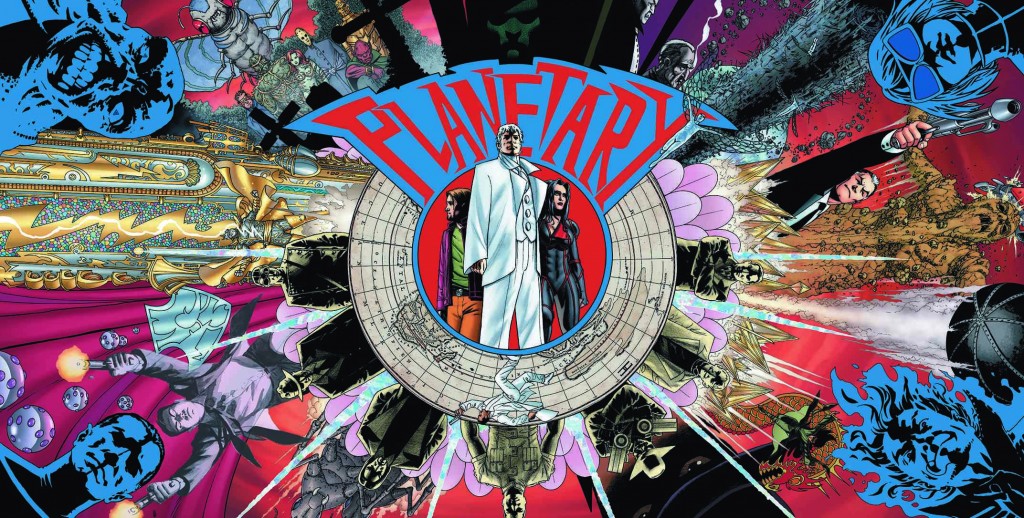
  • single highest concept in super-hero comics history: the Wildstorm Comics publication, Planetary.
  • Warren Ellis (writer) and John Cassaday’s (artist) Planetary was first published in April 1999 [ By result, there exists a paradox in his creation. Ellis has shaped a situation wherein he has created the ultimate postmodern super-hero concept while at the same time revealing the modernist arrival of his own heroes. ]


http://manwiththemuckrake.files.wordpress.com/2011/12/campbells_monomyth_rsoap__006.jpg


http://ifanboy.com/wp-content/uploads/2011/10/planetary27cover_logo-copy-1024x518.jpg


Susan Hegeman’s bold vision of modernism is a clear signal for the need and creation of “super” heroes. America was ready for and needed them. She writes: 
The historical and intellectual keys to modernism are well established, and rehearsed: the horror of the First World War, the development of the scientific concepts of relativity and uncertainty; Freud’s theory of the unconscious and infantile sexuality; the development and proliferation of consumer culture; the invention of the camera, the automobile, the street light, steel frame architecture, sound recording, the motion picture; the consolidation of the globe spanning European empires and the emergence of the United States as a central economic and military power. To this list we might profitably add what Perry Anderson has called “the imaginative proximity of social revolution,” providing hope and fear of radically disruptive changes to come. Perhaps just as crucially as any of these elements, modernism was characterized by self-consciousness, especially a distinct self-awareness of the rapidity of change, and distance from the past. (20)
The super-hero is a creation of science, technology, psychology, revolution, sexuality, values, beliefs, and so on, for what is the super-hero if not an image of our collective psyche.

Like the heroes before the “super” heroes the elements that comprise the super-hero genre are gleaned primarily from the rich tradition of the hero myths that date back to the beginning of civilization.

Campbell’s classical monomyth vs Lawrence and Jewett (expansion from Campbell)American Monomyth


In 1992, Richard Reynolds wrote the first academic text to set down a definition exclusively designed for the super-hero: 
This working definition has the authenticity of being constructed from the motifs of the first ever superhero comic. [Its resemblance to Lawrence and Jewett and Lang and Trimble's efforts is highly apparent.]
1. The hero’s devotion is marked out from society. He often reaches maturity without having a relationship with his parents. 2. At least some of the superheroes will be like earthbound gods in their level of powers. Other superheroes of lesser powers will sort easily with these earthbound deities. 3. The hero’s devotion to justice overrides even his devotion to the law. 4. The extraordinary nature of the superhero will be contrasted with the ordinariness of his surroundings. 5. Likewise, the extraordinary nature of the hero will be contrasted with the mundane nature of his alter ego. Certain taboos will govern the actions of these alter egos. 6. Although ultimately above the law, superheroes can be capable of considerable patriotism and moral loyalty to the state, though not necessarily to the letter of its laws. 7. The stories are mythical and use science and magic indiscriminately to create a sense of wonder.