Explore the ideas of modernism and postmodernism in superhero films made in the last thirty years. By textually analysing your chosen films discuss how the ideas are presented and understood by the audience.
Keywords to start:
- modernism
- postmodernism
- superhero
- film list & hero's role and identity
- Joseph Campbell’s The Hero with a Thousand Faces
- Monomyth

- Joseph Campbell’s The Hero with a Thousand Faces
- Monomyth
- Robert A. Emmons, Jr., 16 October 2005, Modernism and the Birth of the American Super-Hero, [Acessed at 3 July 2013], http://sequart.org/magazine/620/modernism-and-the-birth-of-the-american-super-hero/
An explanation of the American Monomyth and the Comic Book Superhero, the authors reassess Robert Jewett and John Lawrence’s key text on super-hero study, The American Monomyth.Both of these works formulate a significant base for the serious study of the super-hero. Lang and Trimble’s contribution is their final revelation that is as simple as it is precise: “The only conclusion that can be drawn is that, as America and Americans have learned and matured, their concept of what a hero must be and their choice for a being who reflects their values and ideals have changed” (172)
- first “super” hero in comic books is 1938, with the publication of Action Comics #1
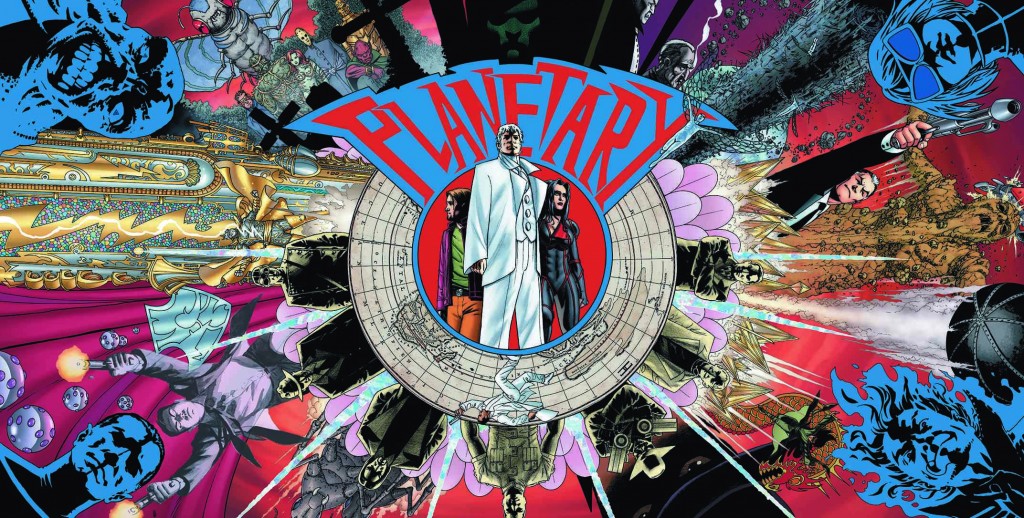
- single highest concept in super-hero comics history: the Wildstorm Comics publication, Planetary.
- Warren Ellis (writer) and John Cassaday’s (artist) Planetary was first published in April 1999 [ By result, there exists a paradox in his creation. Ellis has shaped a situation wherein he has created the ultimate postmodern super-hero concept while at the same time revealing the modernist arrival of his own heroes. ]
 |
| http://manwiththemuckrake.files.wordpress.com/2011/12/campbells_monomyth_rsoap__006.jpg |
 |
| http://ifanboy.com/wp-content/uploads/2011/10/planetary27cover_logo-copy-1024x518.jpg |
Susan Hegeman’s bold vision of modernism is a clear signal for the need and creation of “super” heroes. America was ready for and needed them. She writes:
The historical and intellectual keys to modernism are well established, and rehearsed: the horror of the First World War, the development of the scientific concepts of relativity and uncertainty; Freud’s theory of the unconscious and infantile sexuality; the development and proliferation of consumer culture; the invention of the camera, the automobile, the street light, steel frame architecture, sound recording, the motion picture; the consolidation of the globe spanning European empires and the emergence of the United States as a central economic and military power. To this list we might profitably add what Perry Anderson has called “the imaginative proximity of social revolution,” providing hope and fear of radically disruptive changes to come. Perhaps just as crucially as any of these elements, modernism was characterized by self-consciousness, especially a distinct self-awareness of the rapidity of change, and distance from the past. (20)
The super-hero is a creation of science, technology, psychology, revolution, sexuality, values, beliefs, and so on, for what is the super-hero if not an image of our collective psyche.
Like the heroes before the “super” heroes the elements that comprise the super-hero genre are gleaned primarily from the rich tradition of the hero myths that date back to the beginning of civilization.
Campbell’s classical monomyth vs Lawrence and Jewett (expansion from Campbell)American Monomyth

In 1992, Richard Reynolds wrote the first academic text to set down a definition exclusively designed for the super-hero:
This working definition has the authenticity of being constructed from the motifs of the first ever superhero comic. [Its resemblance to Lawrence and Jewett and Lang and Trimble's efforts is highly apparent.]
1. The hero’s devotion is marked out from society. He often reaches maturity without having a relationship with his parents. 2. At least some of the superheroes will be like earthbound gods in their level of powers. Other superheroes of lesser powers will sort easily with these earthbound deities. 3. The hero’s devotion to justice overrides even his devotion to the law. 4. The extraordinary nature of the superhero will be contrasted with the ordinariness of his surroundings. 5. Likewise, the extraordinary nature of the hero will be contrasted with the mundane nature of his alter ego. Certain taboos will govern the actions of these alter egos. 6. Although ultimately above the law, superheroes can be capable of considerable patriotism and moral loyalty to the state, though not necessarily to the letter of its laws. 7. The stories are mythical and use science and magic indiscriminately to create a sense of wonder.

No comments:
Post a Comment